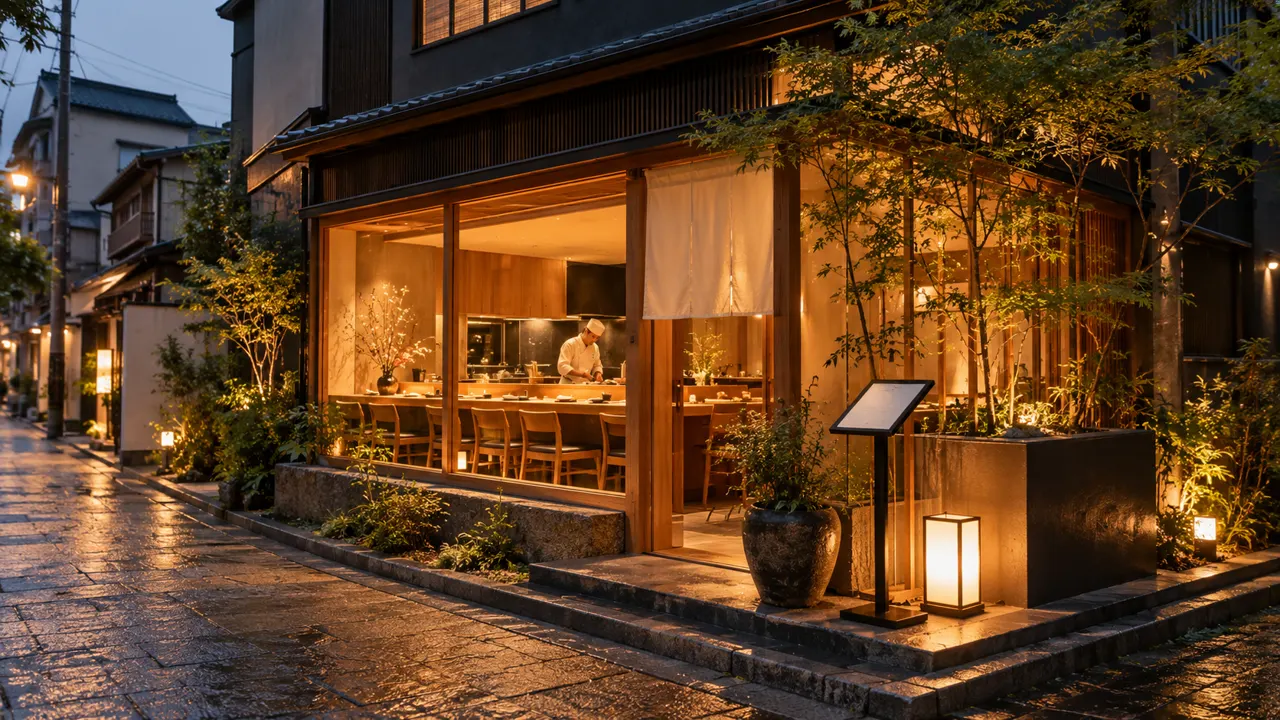
Images are AI-generated illustrations, not actual client projects.
You have a restaurant concept that works at home. In Japan, the next questions arrive together: which area, which customers, which premises and how to fill the seats?
Choosing a site while treating customer acquisition as a later task can leave the two plans pulling in different directions. The intended guest, price and occasion should inform both.
This guide sets out a practical brief for an overseas restaurant team: what to decide, what to measure and what to confirm with the right specialists.
Rakubo’s published work includes restaurant promotion and reservation journeys. Use the following points to prepare a discussion about the support your project actually needs.
Choose the customer before the postcode
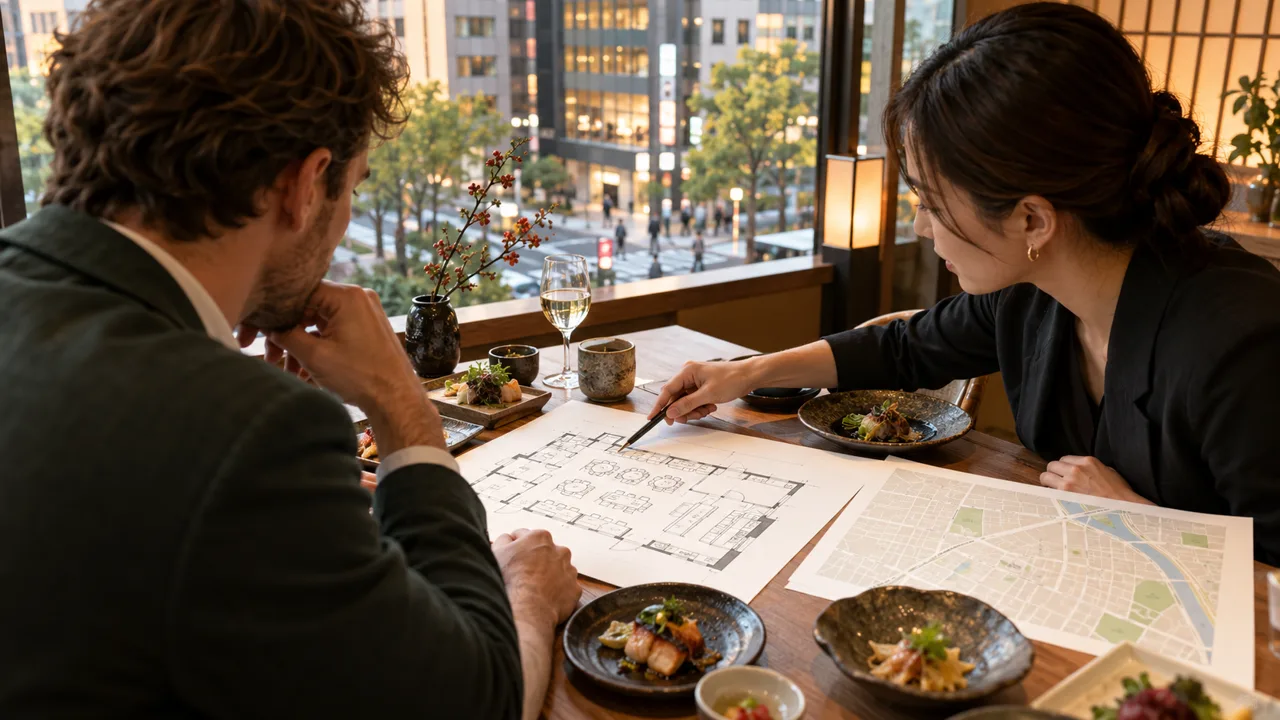
Begin with one specific occasion: a weekday lunch near an office, a weekend family meal, a special dinner or a visitor’s first experience of the cuisine. These are different reasons to choose a restaurant, even if the menu is similar.
Write down the expected spend, party size, service style, seats and opening hours. Then connect them to access, visibility and the space your operation needs. A busy location alone does not explain whether the right guests can use the restaurant at the right time.
Prepare a premises brief that separates essential conditions from preferences. Include the intended activity, area, size, operational requirements and the questions still unresolved. Give the property professional enough context to assess suitability; do not treat a listing as confirmation that the business can operate there.
JETRO’s Setting Up Business guide treats establishment, premises, personnel and other procedures as distinct workstreams. Build a shared timetable, while having the relevant authority or qualified provider confirm the requirements for your particular operation.
Connect discovery with a bookable visit
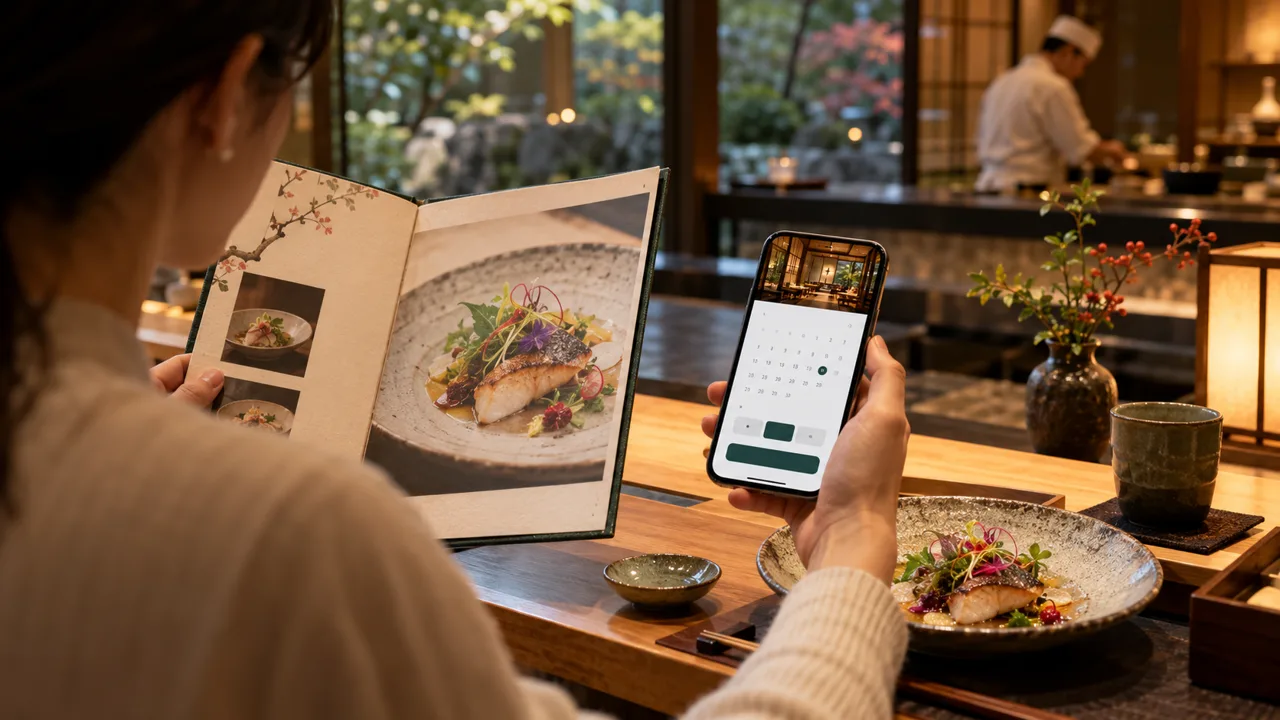
Map a short journey: see the food, understand the occasion and price, check the location, choose a time and complete the reservation. Review every step on a phone. A beautiful post cannot compensate for an unclear booking route.
Give each piece of content a job. A dish video can create interest; menu and interior information can support comparison; a clear reservation page can let the guest act. Keep hours, prices, access and availability consistent across the pages you control.
Rakubo’s restaurant reservation case reports reservations for 300 guests in 3 days. This is a reservation headcount, not 300 bookings or confirmed visits. A separate menu and social media case reports 98,951 content views and at least 100 visiting parties. These are individual historical results, not forecasts for a new opening.
The practical lesson is to measure the stages separately. Content views, reservation-page visits, completed bookings, reserved guest counts and actual visits answer different questions. Do not add them together or use one as proof of another.
Agree responsibilities before committing
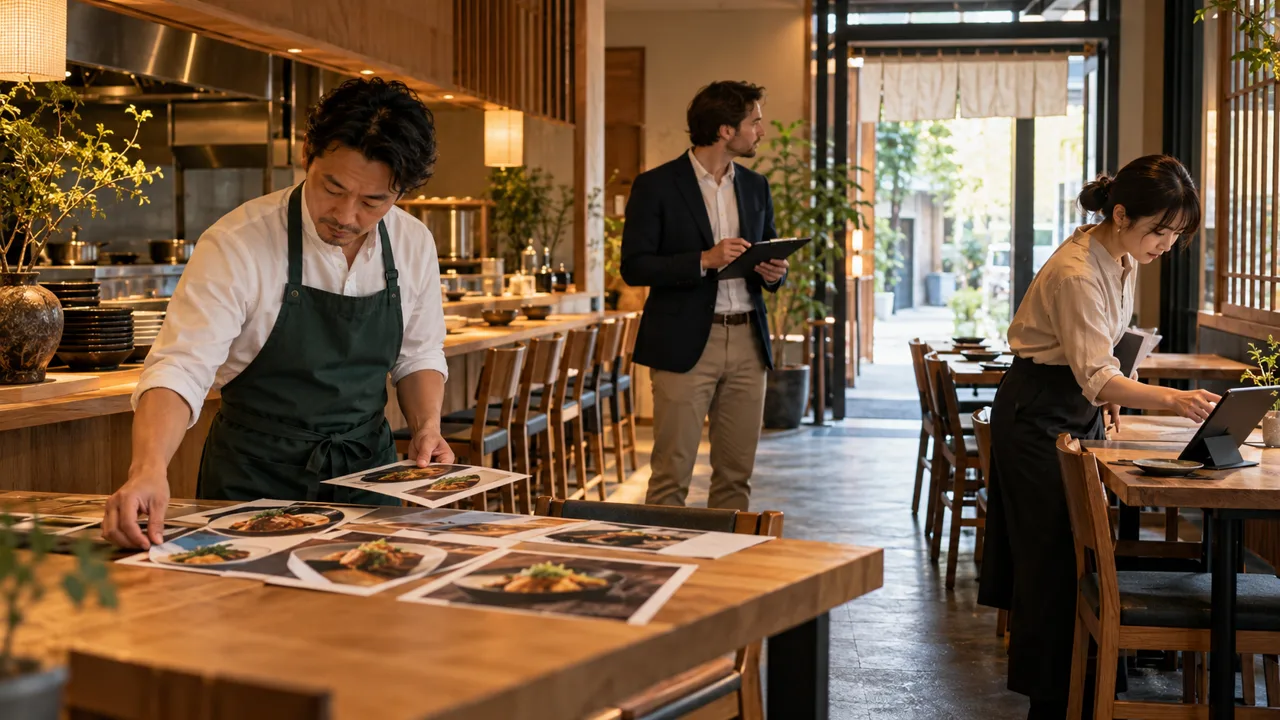
Make a responsibility sheet before commissioning the launch. Who supplies current menu and venue information? Who approves translations and photographs? Who owns the reservation system, updates availability and answers enquiries? Who checks campaign performance?
Keep marketing production distinct from professional and statutory tasks. Incorporation, tax, immigration, permits, brokerage and lease contracts need the appropriate specialist or authority. A marketing proposal should name the work it includes and the work that must be confirmed elsewhere.
Rakubo can discuss the restaurant concept and customer-acquisition plan. Premises requirements, property-search consultation and introductions to specialist providers are subject to individual confirmation by area and conditions; an introduction is not a promise of a lease or approval.
Bring a compact starting pack: your concept, target guest, current menu, preferred area, approximate timing, available materials and open questions. Agree deliverables, review points, costs and responsibilities from that brief. A workable first plan makes the next decision clearer without pretending every launch condition is already resolved.
A useful brief for the next conversation
Use this checklist without registering or downloading anything. Bring what you have; mark unresolved points as open questions.
- Your current stage, website and customer-facing channels
- The restaurant, product or service you want to focus on
- The customer and area you want to reach
- The action to improve: booking, visit, enquiry or purchase
- Your timing, available materials and operational limits
- What is undecided and who can approve the next step
Make the next step specific
Discuss your restaurant’s plans for Japan, starting with the customer, the premises brief and the booking journey.
Sources and published cases
- 3日で300名予約を増やしたSNS活用術 — Restaurant reservations covering 300 guests over three days
- 牛タン飲食店:98,951閲覧・100組以上の来店 — Restaurant content: 98,951 views and at least 100 visiting parties
- JETRO — Setting Up Business — JETRO guide to setting up a business in Japan
- 飲食店の集客代行:SNS・広告・予約導線 — Restaurant marketing services: social media, advertising and reservations
The case figures are individual historical results reported by Rakubo or its clients. They are not Japan-entry outcomes or a guarantee of equivalent performance.