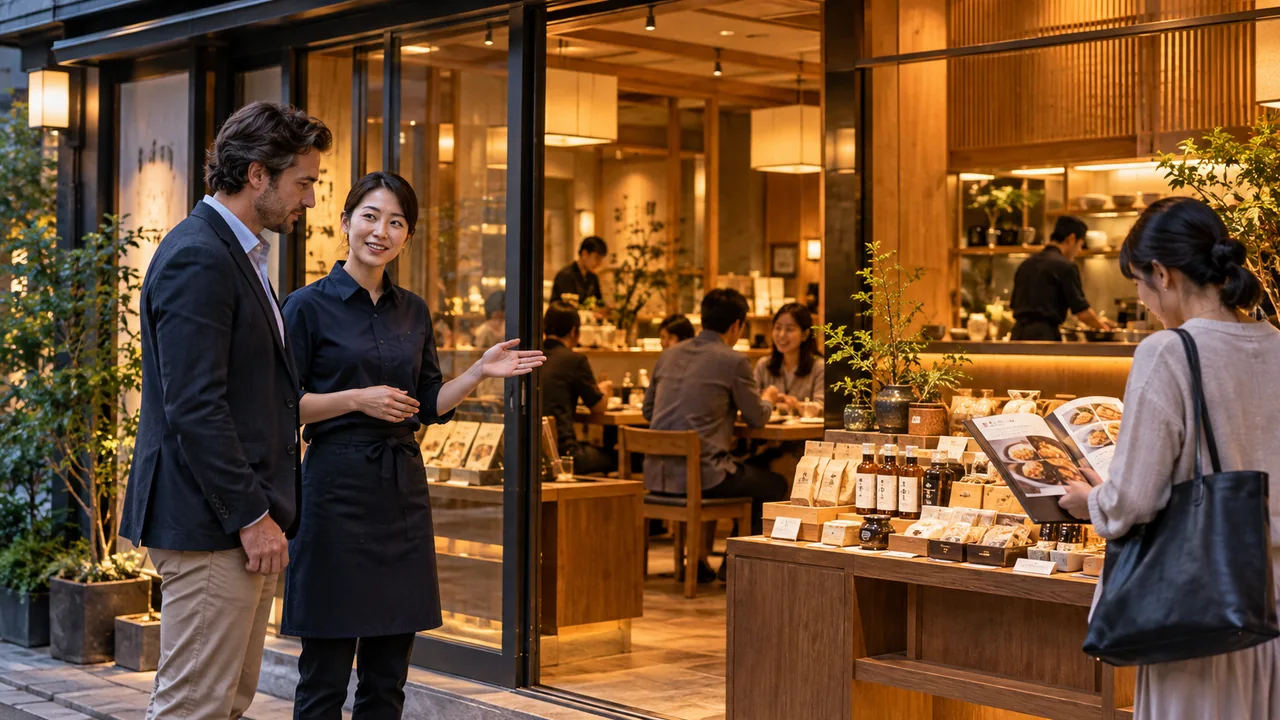
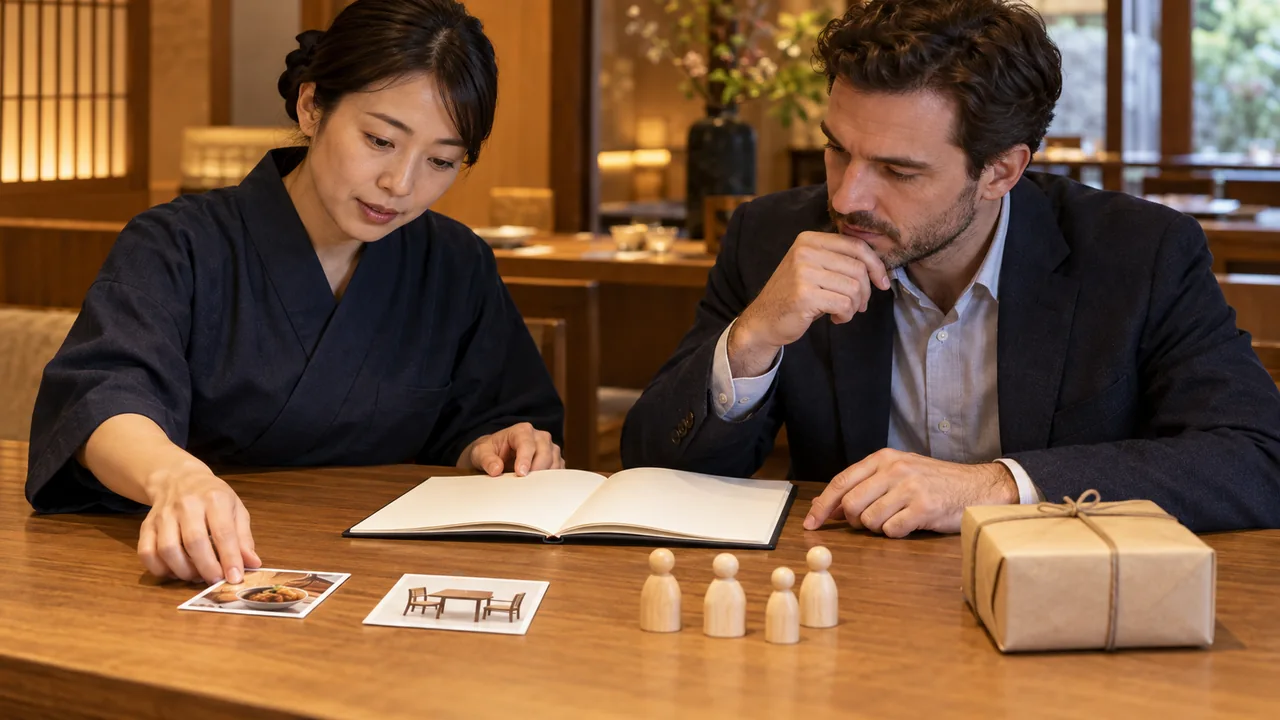
Images are AI-generated illustrations, not actual client projects.
Opening in Japan is a milestone. The next challenge is helping the right customers discover your brand, understand the offer and take the next step.
For an overseas restaurant, retail or consumer brand already operating in Japan, the most useful starting point may be the customer journey you have today. Before adding another channel, check whether your existing content, store information and booking or purchase route work together.
This guide sets out five practical checks, from the customer action you want to improve to the responsibilities needed to keep local execution manageable. An ungated briefing checklist follows the guide.
Rakubo’s published marketing-support scope connects planning, customer-facing pages, social content and improvement. Use the checks below to prepare a discussion about the work your business actually needs.
Choose the customer action you want to improve
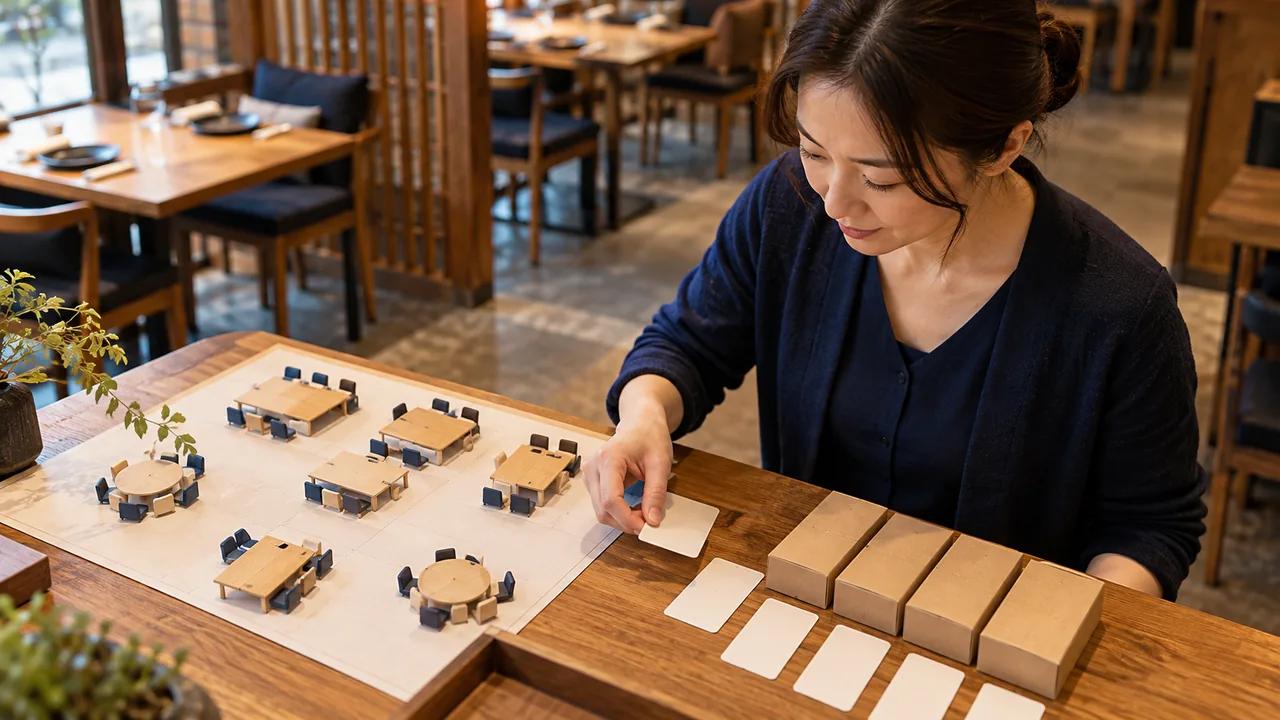
Choose one primary action for the next phase of work. A restaurant might focus on completed reservations for a particular dining occasion. A consumer brand might focus on purchases of a priority product. A shop might need clearer local discovery and better information for people planning a visit.
Then describe the intended customer. Local repeat customers and international visitors can have different information needs, languages and planning habits. Keep these audiences visible in the brief instead of treating everyone in Japan as one group.
Write down the action, audience, offer and operational limits. A promotion should reflect the seats, stock, opening hours or fulfilment capacity that your team can actually support.
Review the journey on a phone
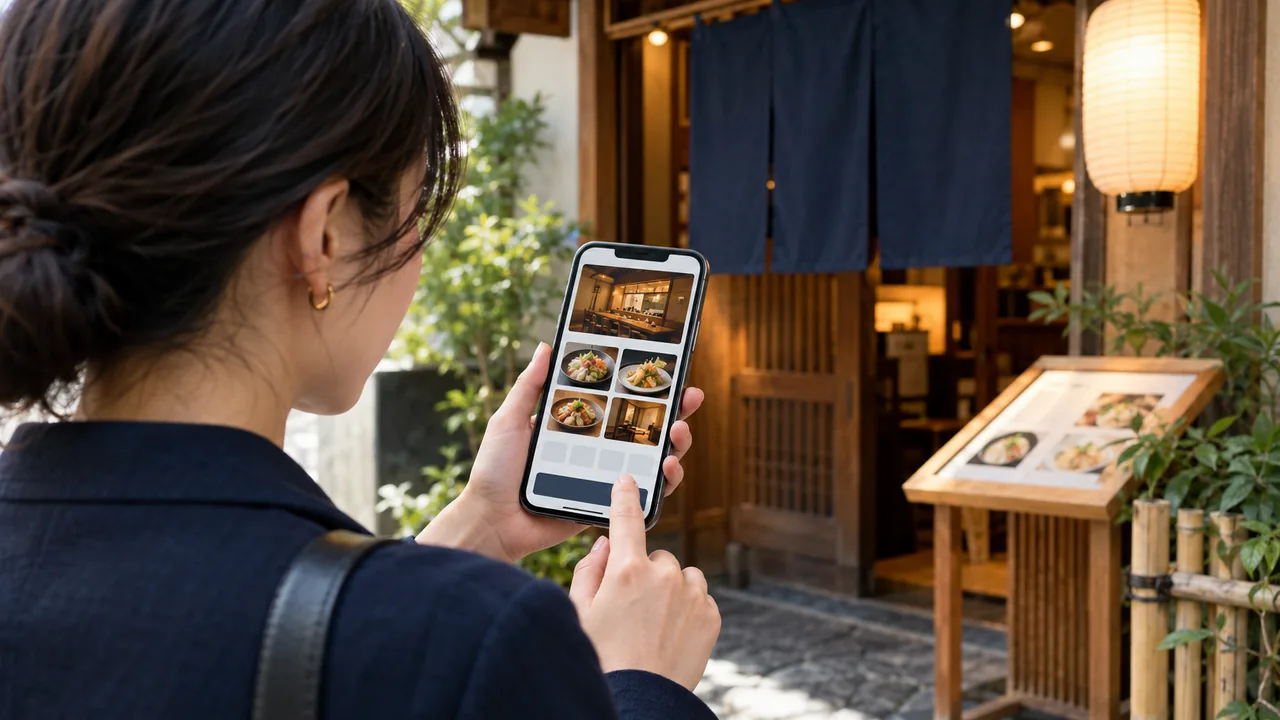
Follow the same route a potential customer would take. Start with a social post, search result or business listing. Can you understand what is offered, check the price, find the location or delivery information, and complete the next step?
For a restaurant, review the menu, dining occasion, access, current opening hours, reservation link and any language choices. For a product, review the product explanation, available variants, price, delivery information and purchase route. Note where the customer must guess, repeat a step or leave without a clear action.
Google’s Business Profile guidance recommends complete and accurate business information and current details such as opening hours. This supports a practical information review; it is not a promise of a particular search position.
Give each piece of local content a purpose
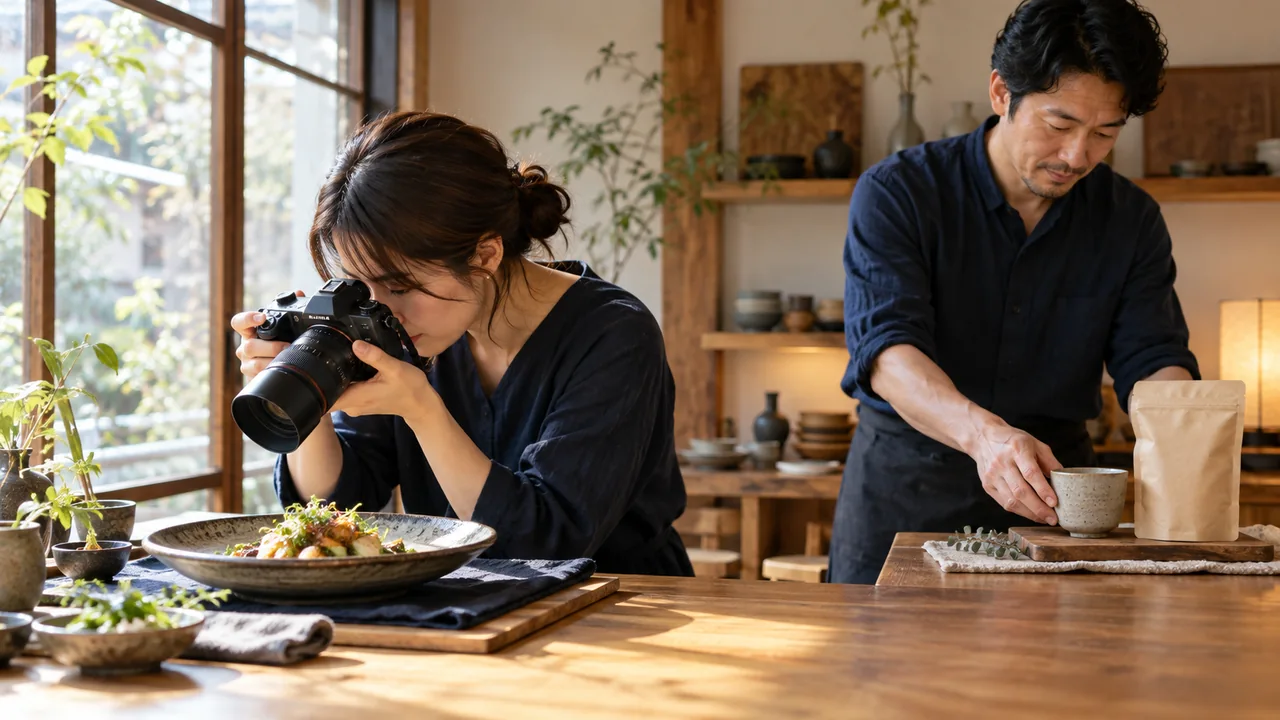
A translated global campaign may still leave practical questions unanswered. Decide which content introduces the brand, which helps customers compare it, and which helps them act.
Restaurant content can show a signature dish, explain the experience and lead to relevant booking information. Product content can explain the maker, demonstrate use and connect to the correct purchase page. Keep the offer consistent across social posts, website pages and the final transaction step.
Rakubo’s published premium tomato-juice case reports that 100 bottles sold out on release day. It describes producer-focused social content and coordinated release activity. This is one historical product-release result, not a recurring sales level or a forecast for another brand.
Keep results and their definitions separate
Reach, website visits, reservation clicks, completed bookings, reserved guests, actual visits and purchases are different measures. Agree which ones your team can observe reliably before reporting progress.
For restaurants, a reservation may cover several guests, and a reserved guest count does not establish attendance. For retail, product views do not establish purchases. Where more than one campaign or channel is active, avoid assigning all sales movement to a single activity without supporting evidence.
Compare like-for-like periods where possible and record changes in the offer, availability and operation. Clear definitions make it easier to decide whether to improve content, the conversion route or the underlying offer.
Make local execution manageable

Create a simple responsibility list. Who supplies current menu or product information? Who approves Japanese copy? Who answers enquiries, updates availability and checks results? Which changes can be made promptly, and which need headquarters approval?
A useful agency brief includes your existing website and channels, priority customer, current offer, desired action, timing and available materials. State any uncertainty plainly. You do not need every answer before discussing the next phase, but responsibilities and scope should be agreed before execution.
Rakubo supports local marketing work across messaging, customer-facing content, social media and booking or purchase pathways. Languages, deliverables, fees and specialist involvement are confirmed for each project. Historical case results do not guarantee equivalent performance.
A useful brief for the next conversation
Use this checklist without registering or downloading anything. Bring what you have; mark unresolved points as open questions.
- Your current stage, website and customer-facing channels
- The restaurant, product or service you want to focus on
- The customer and area you want to reach
- The action to improve: booking, visit, enquiry or purchase
- Your timing, available materials and operational limits
- What is undecided and who can approve the next step
Make the next step specific
If your business is already operating in Japan, begin with the customer action you want to improve and the journey you have today.
Sources and published cases
- Google — Tips to improve your local ranking on Google — Maintain complete, accurate business details and current opening hours
- プレミアムジュースの発売・SNS運用事例 — Premium tomato-juice launch and social media campaign
- 伴走型広告代理店|Web広告・SNS広告運用支援 — Rakubo marketing planning, web content, social media and improvement support
The case figures are individual historical results reported by Rakubo or its clients. They are not Japan-entry outcomes or a guarantee of equivalent performance.